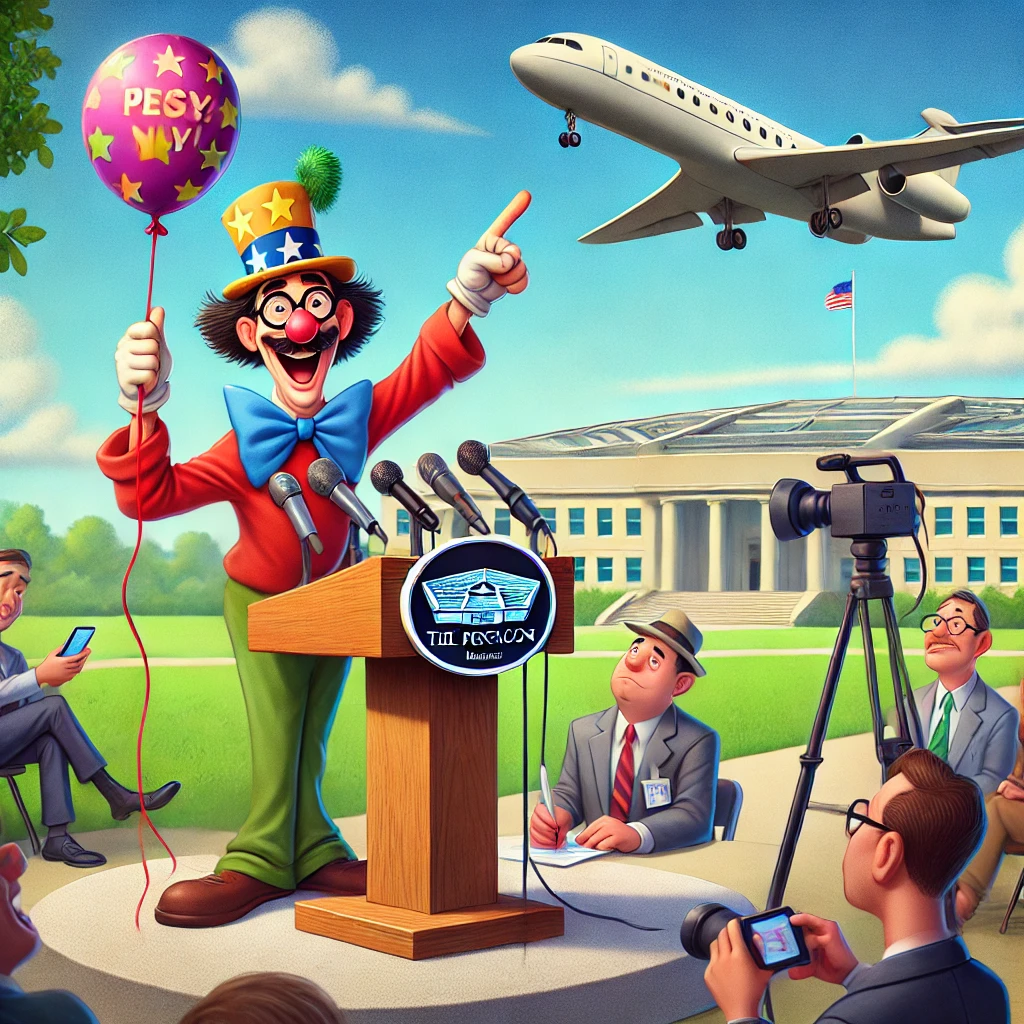
The UAP Paradox: Threat or Friend? Conflicting Narratives from the Pentagon
The conversation surrounding unidentified aerial phenomena (UAPs) has taken a peculiar turn in recent years. On one hand, we’re told that UAPs pose a significant threat to aviators, endangering military and civilian pilots alike. On the other, astronauts operating in the vacuum of space—a much less forgiving environment—seem to encounter these phenomena with remarkable calm, as if they’re nothing more than a routine occurrence. This disparity reveals a glaring paradox in the Pentagon’s messaging: Are UAPs a friend, a foe, or something else entirely?
The Contradiction at the Heart of UAP Discourse
- Threat to Aviators:
- The Pentagon has repeatedly emphasized that UAPs are a potential threat to pilots:
- Claims of near misses with aircraft.
- Concerns about flight safety and airspace violations.
- Urgent demands for Congressional hearings and funding to investigate the “threat.”
- This rhetoric leans heavily on fear, portraying UAPs as unknown dangers that jeopardize national security.
- The Pentagon has repeatedly emphasized that UAPs are a potential threat to pilots:
- Calm Among Astronauts:
- Contrast this with the relaxed demeanor of astronauts like Scott Kelly during encounters with UAPs:
- No emergency protocols activated.
- No signs of panic or urgency.
- A behavior that suggests familiarity and trust, rather than alarm.
- Contrast this with the relaxed demeanor of astronauts like Scott Kelly during encounters with UAPs:
It Can’t Be Both
This conflicting narrative creates a fundamental question: Are UAPs friendly, neutral, or threatening?
- For Aviators: They are portrayed as a risk, justifying increased scrutiny, defense spending, and secrecy.
- For Astronauts: They’re seemingly benign, observed with a level of indifference that suggests institutional knowledge of their non-hostile nature.
This leads to an inevitable conclusion: The Pentagon can’t have it both ways.
Missed Messages from the Pentagon
The contradiction in messaging is more than a communications failure—it’s an indictment of the intentional obfuscation at play:
- Why the Fear Narrative?
- Fear is a powerful tool for control. By framing UAPs as threats to aviators, the Pentagon garners public support for:
- Expanding defense budgets.
- Justifying secrecy and withholding information.
- Retaining control over the narrative.
- Fear is a powerful tool for control. By framing UAPs as threats to aviators, the Pentagon garners public support for:
- Why the Calm in Space?
- Astronauts’ calm demeanor suggests that the military-industrial complex is privy to classified information about the benign or neutral nature of UAPs—information it doesn’t share with the public.
- This raises questions about whether UAPs represent an existential threat at all, or if they’re simply being framed as one for strategic purposes.
Evidence That Contradicts the “Threat”
The actual behavior of UAPs doesn’t align with the Pentagon’s threat narrative:
- No Hostile Actions: Despite countless encounters, there’s little evidence of UAPs actively engaging in aggression toward military or civilian aircraft.
- No Catastrophic Collisions: For a supposed “threat,” UAPs seem remarkably adept at avoiding direct harm.
- Astronauts’ Composure: Encounters in space—potentially more dangerous due to the environment—are met with calm and nonchalance, undermining the idea of an inherent danger.
The Real Threat: Misdirection
The real “threat” isn’t the UAPs themselves—it’s the manipulation of narratives:
- The Pentagon’s conflicting stories sow confusion and distract from the more profound implications of UAPs.
- By framing UAPs as threats in one context and routine in another, the institutions controlling the narrative reveal their true priorities: maintaining power and control over information.
Final Thought: A Demand for Consistency
The UAP paradox forces us to confront the Pentagon’s contradictory stance. If UAPs are a danger to aviators, why do astronauts seem so relaxed? And if they’re not a danger in space, why perpetuate fear on Earth? Until these questions are addressed, the Pentagon’s messaging will remain at odds with the evidence—and the public’s trust will continue to erode.
The time has come for transparency. The evidence is clear, even if the messaging is not: UAPs are not the threat we’re being led to believe. 🚀🛸

 Corroborating Evidence Operations